Article: Inverter vs. Traditional Pool Heat Pumps: Which Saves You More Money?
Inverter vs. Traditional Pool Heat Pumps: Which Saves You More Money?
What if you could heat your swimming pool for less money, enjoy quieter operation, and potentially pay less for the equipment itself?
That’s one of the reasons inverter pool heat pumps are becoming an increasingly popular choice for homeowners looking to extend their swimming season without unnecessarily increasing their electric bills. For years, traditional electric pool heat pumps have been a reliable, energy-efficient way to heat swimming pools. But advances in inverter technology are changing how homeowners compare pool heating systems. Today’s inverter pool heat pumps can offer competitive, and sometimes lower, purchase prices than traditional heat pumps, while also providing the potential for significant energy savings. Some inverter manufacturers advertise energy savings of up to 70% under specific operating conditions.
So what makes inverter technology different? Is an inverter pool heat pump actually better than a traditional heat pump? And how much more can you save by combining it with a variable-speed pool pump?
Let’s compare.
What Is the Difference Between an Inverter and a Traditional Pool Heat Pump?
Both systems use electricity to capture heat from the surrounding air and transfer it into your swimming pool water. The biggest difference is how the compressor operates.
Traditional Pool Heat Pumps
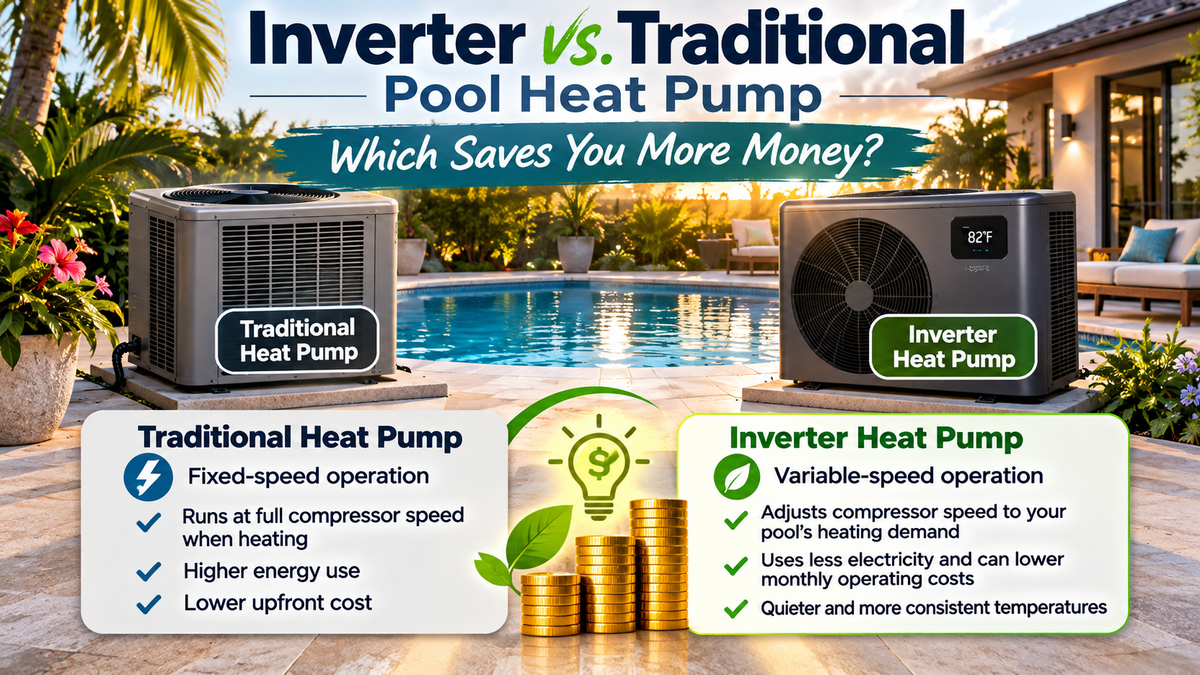
A conventional pool heat pump typically uses a fixed-speed compressor. When your pool needs heating, the compressor operates at full capacity until the desired water temperature is reached. Once the thermostat is satisfied, the compressor shuts off. When the water temperature drops, the compressor starts again. This on/off operating cycle is effective, but it doesn’t allow the compressor to adjust its output based on how much heating is actually needed.
Inverter Pool Heat Pumps
An inverter pool heat pump uses variable-speed compressor technology. Instead of constantly operating at full capacity, the inverter automatically adjusts compressor speed to match the pool’s heating demand. When your pool needs significant heating, the system can increase output. Once your desired water temperature is reached, the compressor can slow down and use less electricity while maintaining a comfortable swimming temperature.
Think of it like driving a vehicle at a steady, efficient speed instead of constantly accelerating and stopping. That ability to adjust output is what makes inverter technology especially attractive for homeowners who heat their pools regularly.
Inverter vs. Traditional Pool Heat Pump: Cost and Performance Comparison
|
Feature |
Traditional Heat Pump |
Inverter Heat Pump |
|---|---|---|
|
Purchase price |
Varies by model |
Can be lower or competitively priced |
|
Compressor |
Fixed speed |
Variable speed |
|
Energy efficiency |
Efficient |
Higher potential efficiency at partial load |
|
Electricity usage |
Full compressor power when running |
Adjusts power to heating demand |
|
Noise |
Full-speed operating noise |
Often quieter at reduced speeds |
|
Temperature control |
On/off cycles |
Modulates heating output |
|
Long-term savings |
Depends on use |
Potential for greater savings |
|
Heating performance |
Reliable |
Adapts to changing heating needs |
The bottom line: An inverter pool heat pump doesn’t necessarily have to cost more upfront. With competitive equipment pricing and the potential for lower operating costs, inverter technology may offer excellent overall value.
Can an Inverter Pool Heat Pump Really Save Up to 70% on Electricity?
Some manufacturers advertise energy savings of up to 70% when comparing inverter technology with conventional systems under specific operating conditions.
The reason is simple.
Traditional heat pumps operate their compressors at a fixed speed. Inverter heat pumps can reduce compressor speed once the pool reaches its desired temperature.
Instead of using full compressor power every time heating is required, an inverter can maintain the water temperature at a lower operating capacity. This can be especially beneficial for homeowners who want to keep their pool at a consistent temperature throughout the swimming season. However, actual savings depend on several factors, including pool size, weather, desired water temperature, equipment efficiency, and how frequently the pool is heated.
Up to 70% is a potential manufacturer-reported savings figure, not a guarantee for every installation.
Why Running an Inverter Pool Heat Pump Longer Can Cost Less
One of the biggest misconceptions about pool heating is that longer operating hours always mean higher electricity costs.
With inverter technology, that isn’t necessarily true. A traditional heat pump operates at full compressor output whenever heating is needed. An inverter heat pump can operate at lower speeds for longer periods while using less electricity per hour. For example, after your pool reaches 85°F, an inverter may be able to maintain that temperature at a reduced compressor speed instead of repeatedly operating at maximum capacity.
The important measurement isn’t simply how many hours the heater runs. It’s how many total kilowatt-hours of electricity the heater consumes. This is why inverter technology can be particularly effective for homeowners who want to maintain a comfortable pool temperature rather than repeatedly heating a cold pool.
The Smart Combination: Inverter Pool Heat Pump and Variable-Speed Pool Pump
If you’re looking to maximize energy savings, combining an inverter pool heat pump with a variable-speed circulation pump is worth considering. These two pieces of equipment work together, but they perform different functions. The inverter heat pump controls the amount of heat delivered to your pool. The variable-speed circulation pump controls how quickly water moves through your pool’s plumbing, filter, and heating equipment. Together, they can help make the overall pool system more energy-efficient.
Why Variable-Speed Pool Pumps Save Electricity
Traditional single-speed pool pumps run at one fixed motor speed, even when maximum water flow isn’t needed. A variable-speed pool pump allows you to reduce motor speed for routine circulation and filtration. At lower speeds, many variable-speed pumps consume dramatically less electricity. And here’s something many pool owners don’t realize: You may be able to run your pool pump longer while using less electricity.
Example: Running Your Pool Pump Longer for Less Money
Let’s compare two hypothetical pool pump setups.
Traditional Single-Speed Pump
- Power consumption: 2,000 watts
- Operating time: 8 hours per day
- Daily electricity consumption: 16 kWh
Variable-Speed Pool Pump
- Power consumption at a reduced speed: 600 watts
- Operating time: 12 hours per day
- Daily electricity consumption: 7.2 kWh
In this example, the variable-speed pump operates four additional hours but consumes 55% less electricity. At an illustrative electricity rate of $0.15 per kWh, that represents approximately $1.32 in daily electricity savings, or about $39.60 over 30 days. These are examples rather than guaranteed results. Actual savings depend on your pump, plumbing system, operating speed, and electricity rate.
How the Two Systems Work Together
A variable-speed pool pump can provide longer circulation periods at reduced energy consumption. Meanwhile, an inverter pool heat pump can adjust its heating output to maintain the desired water temperature efficiently. This combination may allow homeowners to maintain comfortable swimming conditions while minimizing unnecessary electricity consumption.
Important: The variable-speed circulation pump must always provide the minimum water flow required by the heat pump. Running the pump too slowly can prevent the heater from operating properly.
Some pool automation systems can coordinate pump speeds and heater operation, but compatibility and available controls vary by equipment.
Are Inverter Pool Heat Pumps Quieter?
Yes. Quieter operation is another major advantage of inverter technology. Traditional pool heat pumps typically operate their compressors at full speed whenever heating is required. Inverter heat pumps can reduce compressor and fan speeds as heating demand decreases. At lower operating speeds, many inverter models produce noticeably less noise.
This is particularly helpful for homeowners whose pool equipment is located near patios, outdoor kitchens, bedroom windows, or neighboring properties. If you enjoy spending time around your pool in the evening, quieter equipment can make a significant difference. Actual noise levels vary by manufacturer, model, installation, and operating conditions.
Are Inverter Pool Heat Pumps Cheaper to Buy?
One of the biggest reasons homeowners are reconsidering traditional heat pumps is the increasingly competitive pricing of inverter models. While inverter technology was once commonly associated with premium-priced equipment, that’s not always the case today.
Depending on the manufacturer, model, heating capacity, and current pricing, an inverter pool heat pump may actually cost less than a comparable traditional heat pump. That means homeowners shouldn’t assume they’re paying a premium simply because a heater uses inverter technology. When comparing equipment, it’s important to look beyond the price tag and consider heating capacity, efficiency, warranty coverage, climate performance, and long-term electricity costs.
A competitively priced inverter heat pump can be an especially attractive investment when its purchase price and potential operating savings are considered together.
Which Pool Heat Pump Is Better for Florida?
Florida homeowners have an excellent opportunity to take advantage of energy-efficient electric pool heating.
Whether you’re located in Miami, Fort Lauderdale, West Palm Beach, Tampa, Orlando, Jacksonville, Pensacola, or elsewhere in Florida, a properly sized pool heat pump can help extend your swimming season. For homeowners who maintain their pool temperature regularly, inverter technology may be particularly beneficial.
Instead of constantly operating at maximum compressor output, an inverter can adjust to the heating demand as outdoor temperatures change. In South Florida, this can be helpful for homeowners who maintain comfortable pool temperatures through much of the year. In North Florida and the Panhandle, homeowners should also consider how efficiently a particular heater performs during colder weather. Some inverter models are designed for operation at lower outdoor temperatures than others. Choosing the right model and capacity is essential for achieving the performance you expect.
Is an Inverter Pool Heat Pump Worth It?
For many homeowners, the answer is yes. An inverter pool heat pump may offer several advantages over a conventional fixed-speed model. You may benefit from lower electricity consumption, quieter operation, more consistent water temperatures, and competitive equipment pricing. However, the best choice still depends on your pool size, climate, heating habits, and budget.
A traditional heat pump remains a reliable option, especially when the initial price is attractive and the pool is heated only occasionally. But for homeowners looking to maximize efficiency and extend their swimming season, inverter technology deserves serious consideration.
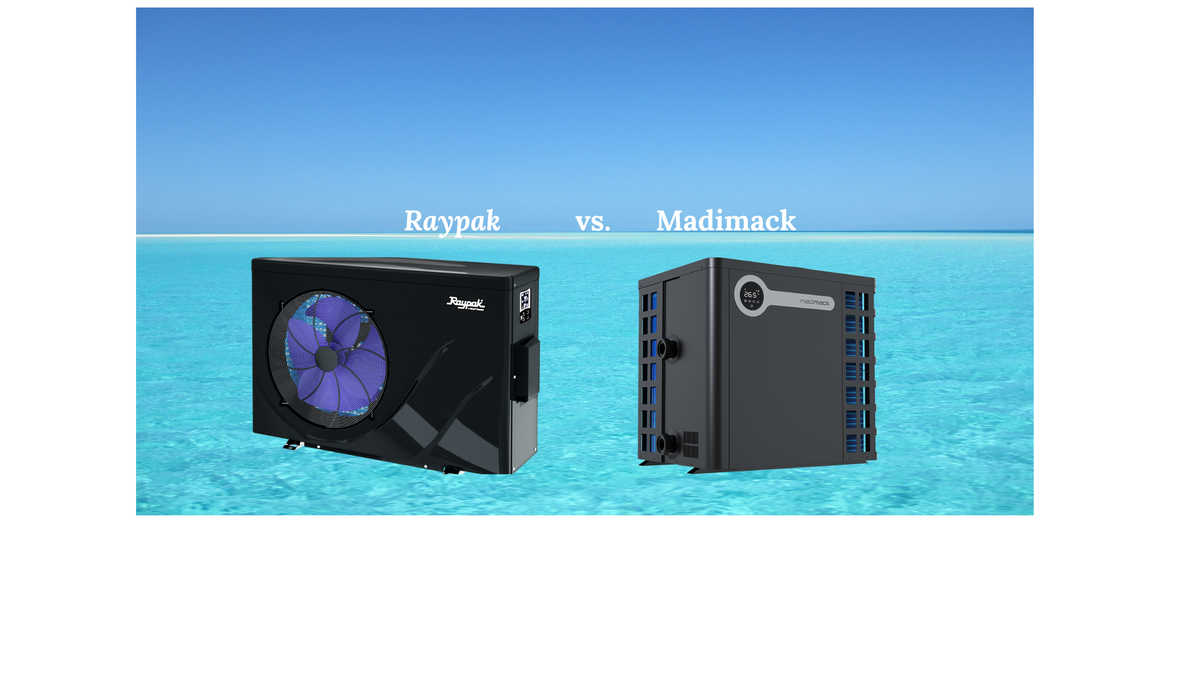
Recommended Inverter Pool Heat Pumps: AquaCal, Raypak, and Madimack
At Pool Heater Xpress, we offer a selection of pool heating solutions from trusted manufacturers.
If you’re considering inverter technology, here are three brands worth exploring.
AquaCal Inverter Pool Heat Pumps
AquaCal offers inverter pool heating technology designed for efficient operation, heating and cooling flexibility, and convenient temperature control. Its TropiCal inverter series is an option for homeowners looking for modern technology and efficient pool temperature maintenance.
Raypak Inverter Pool Heat Pumps
Raypak offers inverter technology in select pool heat pump models, including options designed for efficient heating and temperature management. Raypak is worth considering when comparing equipment capacity, features, and overall value.
Madimack Inverter Pool Heat Pumps
Madimack offers advanced inverter pool heat pumps, including its InverTITAN and InverELITE product lines. These systems are designed for homeowners looking for efficient operation, quieter performance, and options suited to different climates. The best inverter heat pump isn’t necessarily the most expensive model. It’s the one properly matched to your swimming pool, location, and heating expectations.
Frequently Asked Questions About Inverter Pool Heat Pumps
Do inverter pool heat pumps use less electricity?
They can. Inverter heat pumps adjust compressor speed based on heating demand, which can improve efficiency when maintaining pool temperature.
Can an inverter pool heat pump save up to 70%?
Some manufacturers advertise savings of up to 70% under specific conditions. Actual savings depend on the equipment and how it’s operated.
Are inverter pool heat pumps cheaper than traditional heat pumps?
They can be. Depending on the manufacturer, capacity, and current pricing, some inverter models are available at lower prices than comparable conventional heat pumps.
Can I connect an inverter pool heat pump to a variable-speed pool pump?
Yes. A variable-speed circulation pump can work with an inverter heat pump as long as the required water flow is maintained. Direct communication or automated coordination depends on equipment compatibility.
Is it better to leave an inverter pool heat pump running?
For homeowners who swim frequently, maintaining a consistent temperature can be convenient and efficient. For extended periods when the pool isn’t being used, lowering the temperature setting may reduce energy consumption.
Are inverter pool heat pumps quieter?
Many are quieter at reduced compressor and fan speeds than traditional fixed-speed models. Actual sound levels depend on the specific heater.
Do inverter pool heat pumps work in cold weather?
Yes, but operating temperature ranges and heating performance vary by model. Homeowners in cooler climates should choose a heater designed for their local conditions.
Final Thoughts: Which Pool Heat Pump Saves You More Money?
If you’re comparing a traditional pool heat pump with an inverter model, don’t assume the traditional heater is automatically the less expensive option. Today’s inverter heat pumps can offer competitive purchase prices, quieter operation, and the potential for substantial long-term energy savings. And when you combine inverter technology with a properly programmed variable-speed pool pump, you can improve the efficiency of your entire pool circulation and heating system.
The result? More comfortable swimming, quieter equipment, and the potential to spend less money operating your pool.
Let Pool Heater Xpress Help You Choose
With over 40 years of pool industry experience, Pool Heater Xpress can help you compare traditional and inverter pool heat pumps and find the right equipment for your swimming pool.
We offer leading brands, manufacturer warranty coverage, and free nationwide shipping on qualifying pool heaters. Whether you’re interested in AquaCal, Raypak, Madimack, or another pool heating solution, we’re here to help. Shop pool heaters or contact us today at PoolHeaterXpress.com
Energy savings, equipment prices, and operating costs vary by model, installation, climate, and usage. Manufacturer-reported maximum savings should not be interpreted as guaranteed results.

Written by Scott Smith